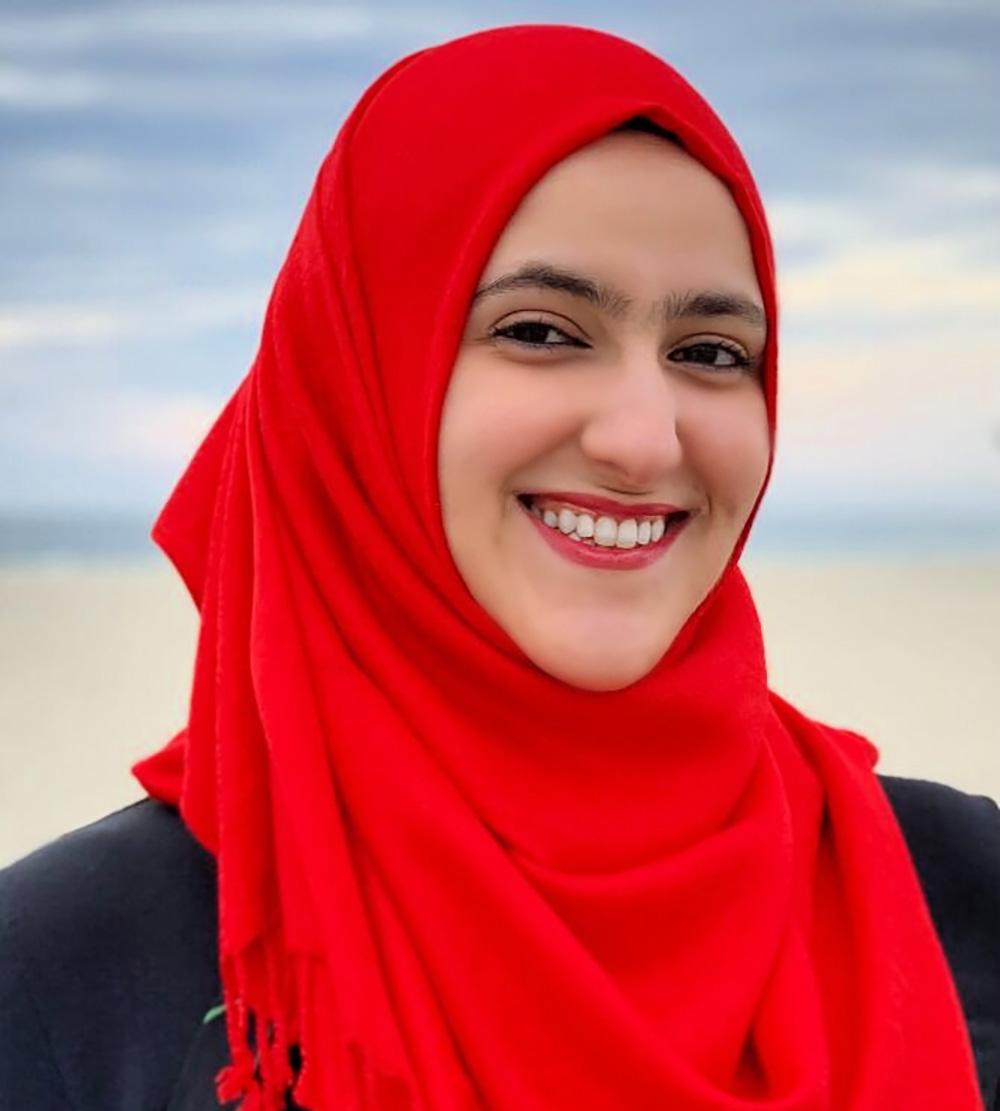
Fatima Khan, MBBS
Fatima Khan, MBBS, is a resident at the Jamaica Hospital Medical Center/Albert Einstein College of Medicine FMR Program in the Bronx, NY. She is a 2026 recipient of a STFM Foundation Faculty for Tomorrow Resident Scholarship.
Dr Khan's family medicine Story
Why are you interested in teaching family medicine?
Dr Khan: Person in a new city, refugee in a new country, student in a new grade or school, employee in a new workplace or new year of employment, patient with new worrisome symptoms in need of specialist care—they all have one thing in common. Their first point of contact is a family medicine provider. family medicine is often recognized as the specialty of supporting people from birth to earth or the specialty of caring for families through generations. For me, it is the specialty of first point of contact.
I was blessed to have teachers in medical school and residency who modeled the core values of family medicine—compassion, continuity and comprehensive care. One of the most memorable things my medical school faculty taught us was what he called the ABC of medicine. A was for availability, B was for behavior and C was for competence. He said this would be the most important chapter of medicine and it would guide us in our practice in that order. Unless we are available for our patient and behave with them in a way that makes them feel heard and validated, our competence will mean nothing to that patient. Teaching family medicine would allow me to be that guide for someone. It would enable me to pass on the curiosity and commitment to future family medicine providers. I am interested in teaching family medicine to strengthen learners’ understanding of the principles of family medicine and equip them with tools to be invaluable family medicine providers for the communities they choose to practice in.
I have enjoyed teaching from a young age. My love for teaching started with tutoring my siblings and cousins and continues to grow as a mentor to medical students and residents. While working on my residency applications, I joined Project IMG, an organization that aims to support international medical graduates in their journey of pursuing residency in the United States. I was one of their instructors for ethics. For my work, I was awarded a certificate of outstanding contribution to their program.
As a resident I have presented at Grand Rounds, regional, national and international conferences. The best experience though was my first Integrative Medicine presentation to our residency program. The residents participated enthusiastically in the didactics session and one of my juniors exclaimed “Never stop teaching!” That has been the most priceless compliment during residency. It also informs my choice of continuing to pursue teaching family medicine in an official role after graduating from my family medicine residency program in 2026. It is the fulfillment of a promise to my dearest junior and to myself to never stop teaching and transcend my continuity of care for generations to come.
How do you think you can make a difference in the future of family medicine?
Dr Khan: The future of family medicine lies in the compassionate hearts of future family medicine providers. In a fast paced world where AI may be taking over everything, one thing remains sacred–the empathy provided by caring providers. I have experienced life as an immigrant in two countries on two continents, as a minority in my country of origin and person of color who identifies as a woman. Across the different worlds I lived in, one need overshadowed all. It was the need to be seen and supported.
As a family medicine teacher, I aim to inspire in future family medicine providers the values they will need in an ever changing environment. As medicine evolves in response to new technologies, shifting demographics, and systemic challenges, I believe family medicine providers are uniquely positioned to guide that evolution. My goal is to contribute to the future of family medicine by strengthening the human connection in care, advancing equitable access through innovation, and promoting preventive and community-centered health.
The foundation of my vision lies in the belief that effective healthcare begins with relationships. Family medicine providers often serve as the first and most consistent point of contact in a patient’s life, witnessing the interconnectedness of medical, emotional, and social factors that shape health. By actively listening, understanding patients’ values, and partnering in shared decision-making, I can help patients feel seen and supported—not just treated.
At the same time, I recognize that family medicine must continue to adapt to meet modern challenges. Many communities and individuals still face barriers to consistent care due to geography, socioeconomic status, or systemic inequities. I aim to use technology, such as telehealth, remote monitoring, and data analytics, to improve access and efficiency.
As an integrative medicine track resident, I am deeply passionate about preventive medicine, especially primary and primordial prevention. Our patients are often exposed to constant stream of helpful and harmful health hacks through their social media. Integrative medicine has allowed me to meet the patient where they are in a better way. This is what I want the future of family medicine to look like. Providing patient with information about evidence based alternative therapies, early intervention, and lifestyle counseling, can empower patients to take ownership of their health, weed out false advertising and prevent chronic diseases before they start. Through collaboration, family medicine can move beyond the clinic walls and become a true advocate for population health.
The sustainability of family medicine depends on strong leadership that values primary care as the cornerstone of an effective healthcare system. I hope to mentor future students and residents, encouraging them to pursue family medicine and to see the profound impact they can have on patients’ lives and communities. As a medical student and resident I have held many leadership positions and aim to use my learning in my future endeavors. In the future of family medicine, I see an opportunity to blend tradition with transformation and to uphold the socially aware, culturally responsible comprehensive care that defines the field while embracing innovation and advocacy.
Contribute to the Creation of the Next STFM Story
Transforming the future of family medicine would not be possible without the generosity of countless STFM members and supporters. Through both member and departmental donations, the STFM Foundation is able to support the pipeline for academic family medicine.
Help transform the future of academic family medicine by donating to the STFM Foundation. If you have questions about the STFM Foundation, contact Mindy Householder at (800) 274-7928 or mhouseholder@stfm.org.